
The 10 Most Common Car Air Conditioning Problems
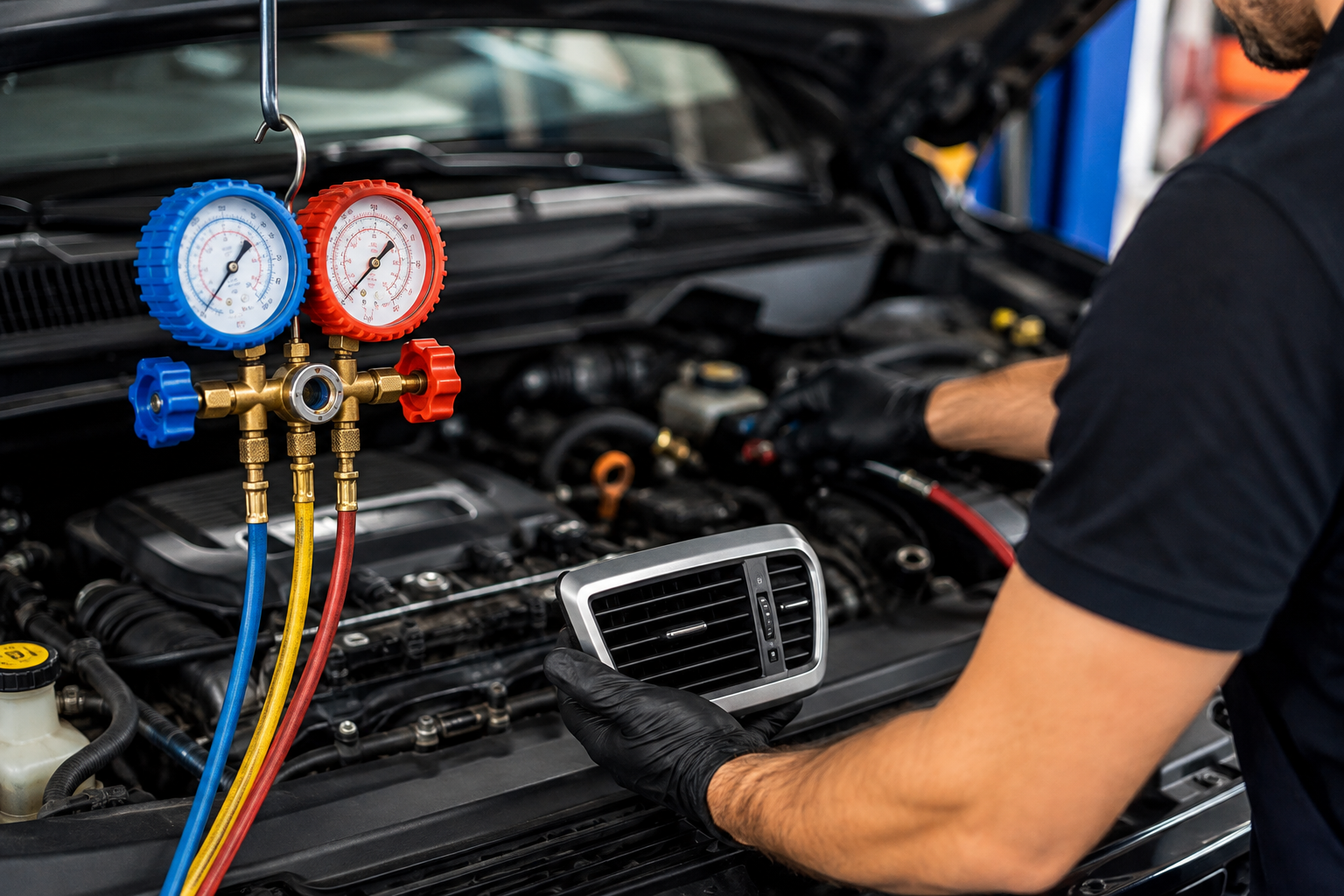
A car's air conditioning system does more than provide comfort: it keeps windows demisted for better visibility and makes driving safer and less tiring. Yet it's one of the systems most often overlooked until it stops cooling. In this article we review the ten most common faults, how to spot them, and what to do in each case.
Why air conditioning fails
The climate control system works with a sealed, pressurised circuit that combines refrigerant gas, lubricating oil, and electrical and mechanical components. Over time, the seals dry out, gas escapes naturally, and parts wear down. Regular servicing helps you stay ahead of problems and avoid more costly repairs.
The 10 most common faults
1. Refrigerant gas loss
This is the number one reason air conditioning stops cooling. The circuit loses a small amount of gas each year naturally, but a leak speeds up the process. The typical symptom is air that gradually comes out less cold. It requires locating the leak and recharging; simply "topping up the gas" without checking the source isn't enough.
2. Faulty compressor
The compressor is the heart of the system. When it fails, you may hear a metallic noise when switching on the AC, get no cold air at all, or find the magnetic clutch won't engage. It's one of the most significant repairs and should be diagnosed as soon as possible to prevent damage to other components.
3. Clogged cabin filter
A blocked pollen filter reduces airflow and encourages bad odours. We recommend replacing it roughly once a year or every 15,000 km, though you should do it sooner if you regularly drive in areas with lots of dust or pollen.
4. Bad odours and mould in the evaporator
Moisture that builds up in the evaporator is the ideal breeding ground for bacteria and mould, which cause that musty smell when you start the AC. A disinfection treatment of the circuit combined with a filter change usually resolves it.
5. Blocked or damaged condenser
The condenser sits in front of the radiator and catches insects, leaves and dirt. If it becomes clogged or is damaged by stone chips, the system loses its cooling capacity. It can also become a source of leaks.
6. Fan or cooling fan failure
If the fan that cools the condenser stops working, the AC cools well while driving but stops doing so when the car is stationary or stuck in traffic. This is usually due to an electrical problem or a fault in the fan motor itself.
7. Faulty sensors and pressure switches
The system uses pressure and temperature sensors to manage its operation. A faulty pressure switch can prevent the compressor from starting as a protective measure, leaving you with no cold air even if everything else is in good condition.
8. Electrical faults and fuses
Relays, fuses and connections are frequent culprits behind intermittent failures: the AC works sometimes and not others. An electrical diagnosis pinpoints the exact fault without replacing parts unnecessarily.
9. Worn accessory belt
On many vehicles, the belt that drives the compressor is the same one that powers other components. If it's loose, cracked or worn, it can cause squealing when you switch on the AC and a loss of performance.
10. Distribution flaps and climate control
The motors and flaps that distribute air through the cabin can also fail. The result may be air that doesn't come out of the desired vents or a temperature that won't respond to the controls. This usually requires specific diagnosis of the climate control system.
Symptoms you shouldn't ignore
- The air cools less and less, or takes longer to do so.
- Strange noises when switching on the climate control.
- Unpleasant odours when turning on the AC.
- Drops or excessive moisture inside the cabin.
- The system works intermittently.
Any of these signs means it's worth getting a check-up before the problem gets worse.
Tips to extend the life of your system
- Use the air conditioning in winter too, for a few minutes: this keeps the circuit lubricated and the seals in good condition.
- Change the cabin filter regularly.
- Have the system inspected and, if necessary, recharge the gas periodically depending on its condition.
- If bad odours persist, request a disinfection of the circuit.
Working on the refrigerant circuit requires specific equipment and expertise: it operates under pressure and involves gases that must be handled correctly. For safety and a reliable diagnosis, the best option is to leave these tasks to a specialist workshop.
Get your air conditioning checked in time
If you notice your climate control isn't cooling like it used to, is making noises or giving off odours, don't wait for the hot weather to take action. At GLORICAR 2020 (Málaga) we carry out complete diagnostics, leak detection, gas recharging and circuit disinfection. Book an appointment or request a no-obligation quote and drive with your air conditioning at full performance.
Frequently asked questions
How often should the air conditioning gas be recharged?
There's no fixed timeframe, as the circuit naturally loses a small amount of gas each year. If you notice it's cooling less, it's worth having it checked. Before recharging, it's important to make sure there are no leaks so the problem doesn't recur.
Why does my air conditioning smell bad when I turn it on?
The odour is usually caused by mould and bacteria that build up in the evaporator due to moisture, along with a clogged cabin filter. Disinfecting the circuit together with changing the filter normally eliminates the problem.
Is it bad to use the air conditioning in winter?
On the contrary, it's recommended. Running it for a few minutes now and then keeps the compressor lubricated and the seals in good condition, and it also helps demist the windows quickly and improve visibility.
Can I recharge the air conditioning myself?
It's not advisable. The circuit operates under pressure and the refrigerant gas must be handled with specific equipment. An incorrect charge can damage the compressor and won't fix any leaks, so the safest option is to visit a workshop.
How much does it cost to repair a car's air conditioning?
It depends on the fault: a filter change or a recharge is not the same as replacing the compressor. The best approach is a prior diagnosis to determine the exact cause and provide an accurate quote.